30-second read
- 850M monthly users skewing 16-34 — reach that Meta under-serves.
- Sponsored Snaps land in the Chat tab; shoppable AR lenses (Sep 2026) put buy buttons inside try-on.
- A natural fit for eyewear, beauty and apparel with a try-on angle.
Snapchat's scale keeps getting underestimated: roughly 850 million monthly users, 443 million daily, with 16-34-year-olds making up the core — the young demographic Meta covers worst. Two 2026 products matter for DTC. Sponsored Snaps put a short vertical video directly into the Chat tab — the least intrusive video placement with unusually high open rates. And Shoppable AR Lenses (September 2026) place a buy button inside the AR experience, so a user tries on glasses or lipstick and taps through to checkout without leaving the Lens. AR try-on is Snapchat's signature capability, and beauty, eyewear, apparel, and accessories are its natural categories.
What each product solves
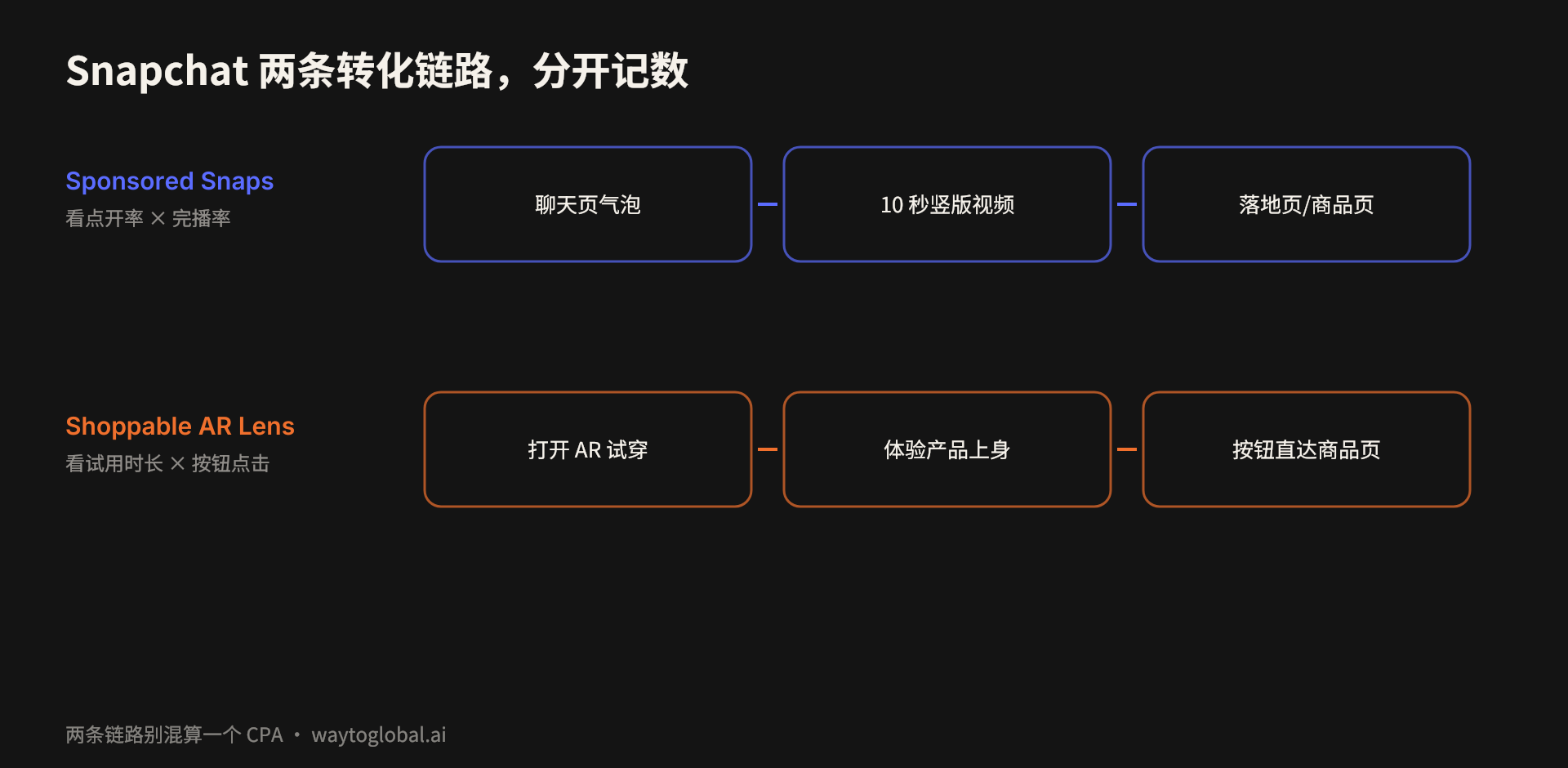
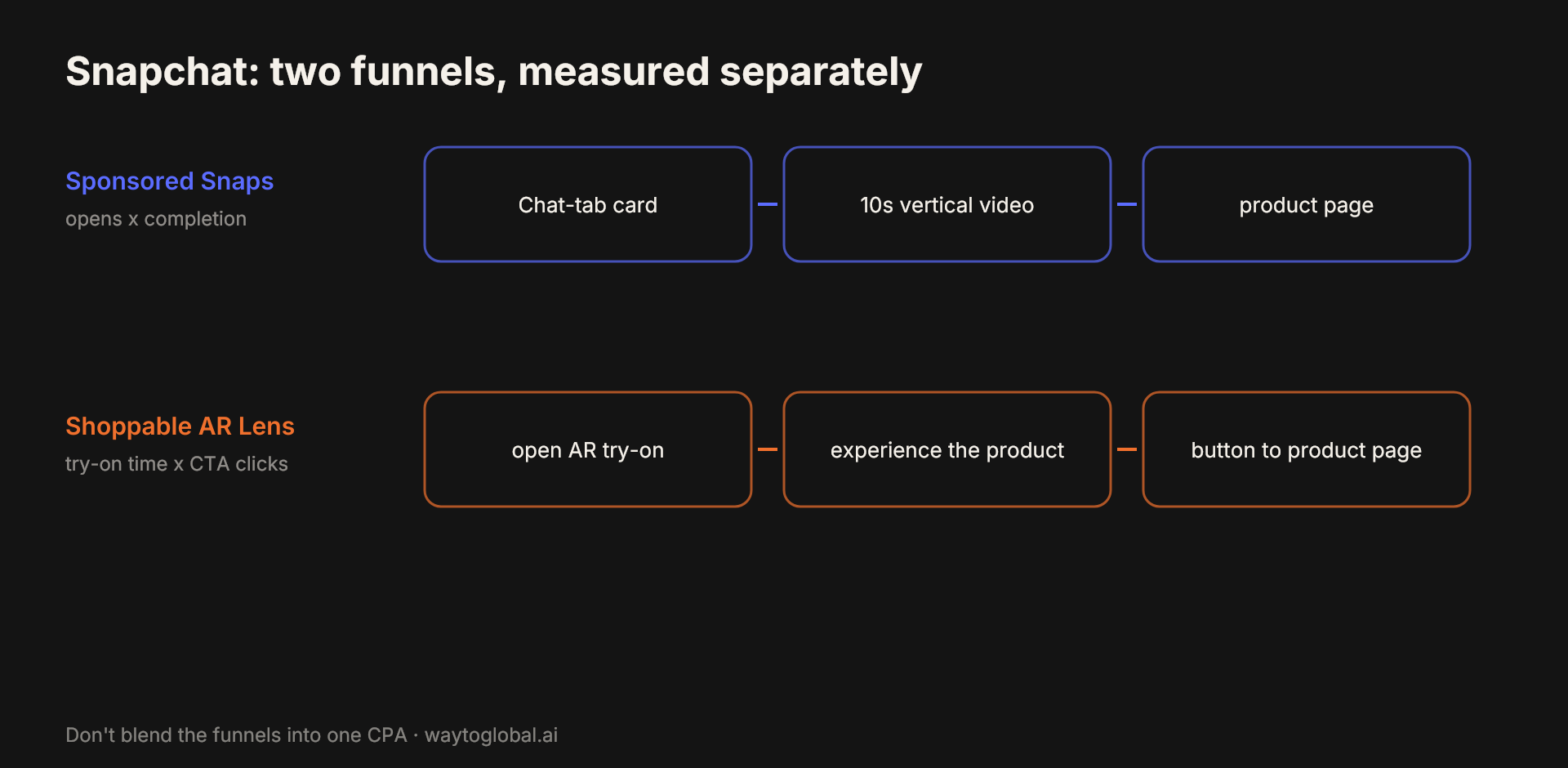
Sponsored Snaps solves opens: the ad arrives as a chat-bubble card, and opening it plays a ~10-second vertical video. Because it lives in the chat list rather than a feed, open rates run high. It fits product launches and promo beats, and the production bar is one good vertical video. Shoppable AR Lenses solve conversion: try the product on in AR, then tap straight to the product page — play and buy connected inside one experience. For brands that can produce AR (beauty and eyewear above all), this is an experiential conversion slot Meta does not offer.
The entry math
The timing call splits by brand type. Beauty, eyewear, apparel, accessories: Shoppable AR Lenses just launched, and early movers can ride cheap AR production (official templates and agency support) — such windows typically last quarters. For everyone else: Snapchat CPMs have long run below Meta's, and young-audience reach is the hard reason — if 16-30-year-olds matter to you, this is one of the few places left to reach them precisely. Poor fits: 35+ skew categories (the audience isn't there) and teams with no vertical-video capacity.
Getting started
Self-serve account, pixel installed, optimize to Purchase — Smart Bidding handles most of the auction. Start with Sponsored Snaps: cut your best-performing Meta vertical into a 10-second edit; the test is cheap and tells you whether the audience bites. Then take AR in two tiers: template-based Lenses at a few thousand dollars for a first pass, and for differentiation categories (eyewear, beauty) a custom try-on Lens with the buy button attached. Budget: 30-80 dollars a day for two weeks, reading backend CPA alongside completion rate — completion is the mid-funnel metric that matters for Snaps.
Risks and measurement
Two risks. Attribution: Snapchat users also see-and-search, so branded search volume belongs next to CPA. Creative half-life: Snaps completion rates decay fast — two weeks is roughly one creative's half-life, so plan refreshes. Measurement: read opens x completion for Snaps, and try-on duration x button clicks for Lenses — keep the two funnels separate rather than blending one CPA. Set expectations at 10-20% of Meta spend as a young-audience second channel.
Sources: Cropink 2026 statistics; Campaign (Shoppable AR Lenses, September 2026); The Keyword (Sponsored Snaps). Verified 2026-10-29.
Official case: LOOKFANTASTIC (beauty ecommerce)
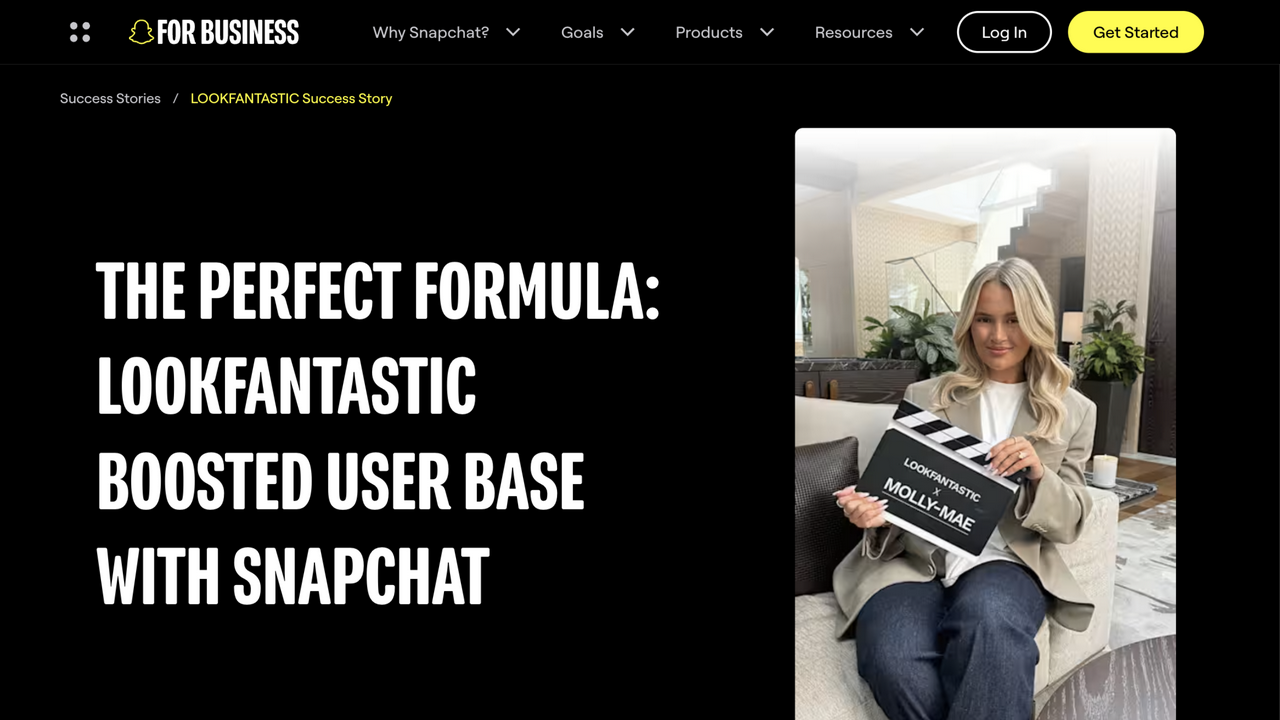
On Snapchat's official Inspiration library, beauty ecommerce LOOKFANTASTIC ran a multi-format campaign that unlocked incremental reach and lifted overall performance — the case page is public on forbusiness.snapchat.com. Peers on the same library: Hershey's MENA tested native lead-gen at a 6% lower CPM; Elevenparis pulled 11M+ Spotlight views in two months.
Sources: LOOKFANTASTIC; Hershey's; Elevenparis (official success stories).
Series: all ten emerging-media platforms compared on one page — Emerging Media Buying Guide 2026. 系列:十个平台一张对照表——《2026 新兴媒体投放总览》。
Wondering if AR try-on fits your product?
Want Snapchat Ads opened and your first Sponsored Snap or AR lens live? We handle onboarding, creative sourcing and the first campaign. Leave your product category, price point and current channels — the account comes next.