30-second read
- A shopping engine, not a mood board: $3.65B in retailer ecommerce revenue in 2025.
- Top of Search placements measured 48% more efficient; Performance+ automates the buying.
- Strongest for visual categories — home, fashion, beauty, DIY — with a real catalog.
Pinterest gets left off Chinese DTC brands' shortlists more out of habit than evidence. The numbers: $3.65 billion in ecommerce revenue driven for retailers in 2025, shopping Pins up 52%, and official figures showing brands that add shopping ads see 15% higher ROAS and 2.6x conversion rates. In 2026 the platform closed two gaps that used to justify skipping it — the Performance+ automated campaign suite (its answer to Advantage+) and Top of Search ads (September 2025), which Pinterest reports run 48% more efficiently than standard shopping campaigns. It is a high-intent, lower-competition shopping channel.
What makes it different: users arrive planning purchases
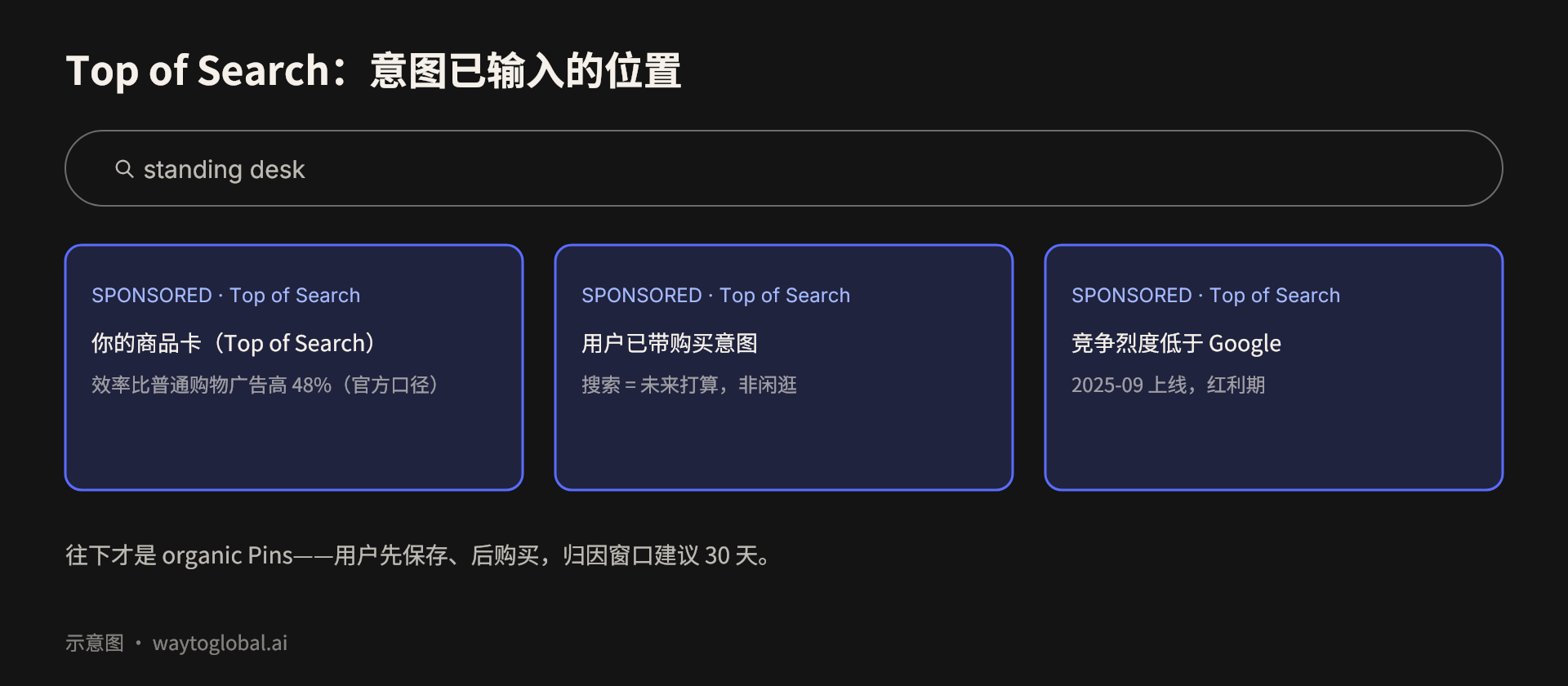
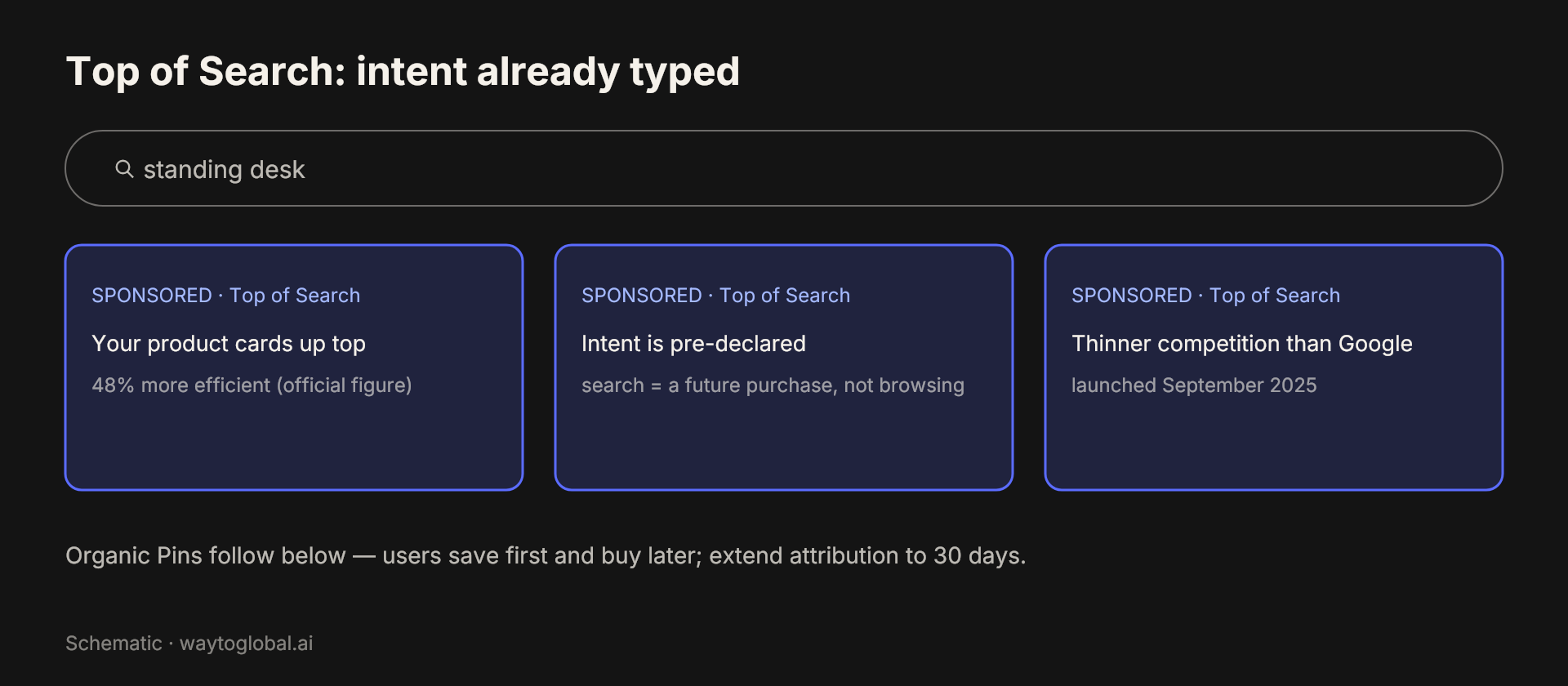
Behavior on Pinterest runs opposite to Meta or TikTok: instead of passive scrolling, users actively search "small bathroom ideas" or "capsule wardrobe" for purchases they intend to make. The ad logic is closer to visual search than feed: creative should show the product in use — lifestyle over white background, collections over single shots. Top of Search puts your product cards at the top of those search results. The user already typed the intent; the slot behaves like a search head position at a fraction of Google's competitive intensity.
Why now
Three reasons. The Top of Search slot is barely a year old — first-mover costs sit below mature placements. Performance+ flattened the operational bar: a small team can run automated campaigns without a platform specialist. And the audience plans purchases for a living: home, apparel, weddings, parenting, and craft categories convert especially well, while 2026's AI shopping assistant and dynamic boards keep pushing the platform toward being a shopping engine. Poor fits: impulse-driven low-AOV categories (decision cycles run long here) and teams with zero lifestyle-creative capacity — this channel eats scene imagery.
Getting started
Catalog first: connect the feed and launch Shopping Ads — that is the foundation Performance+ builds on. Keep structure simple: one Shopping ad group plus one Performance+ shopping group, let the system allocate, don't build ten ad groups on day one. Creative follows search intent: build scene imagery around category head terms, write titles in plain language. Budget and patience: 30-60 dollars a day for three full weeks — Pinterest conversion cycles run longer than Meta's (save now, buy later), and a two-week read will mislead. At week four, compare backend CPA against Meta and scale accordingly.
Risks and measurement
Two things to state upfront. Conversion lag: the save-to-purchase gap runs days to weeks, so extend the attribution window to 30 days or you will systematically undercount it. Scale ceiling: treat it as a second channel — a realistic goal is "incremental at CPA parity or 10% below Meta," not a Meta replacement. Useful mid-funnel metric: save rate. High saves mean the creative hit the planning mindset; conversions arrive late, but they arrive.
Sources: SearchLab 2026 statistics roundup; Pinterest Newsroom (Top of Search announcement, September 2025); Shopify's Pinterest guide. Verified 2026-10-29.
Official case: Castlery (furniture DTC) on Performance+
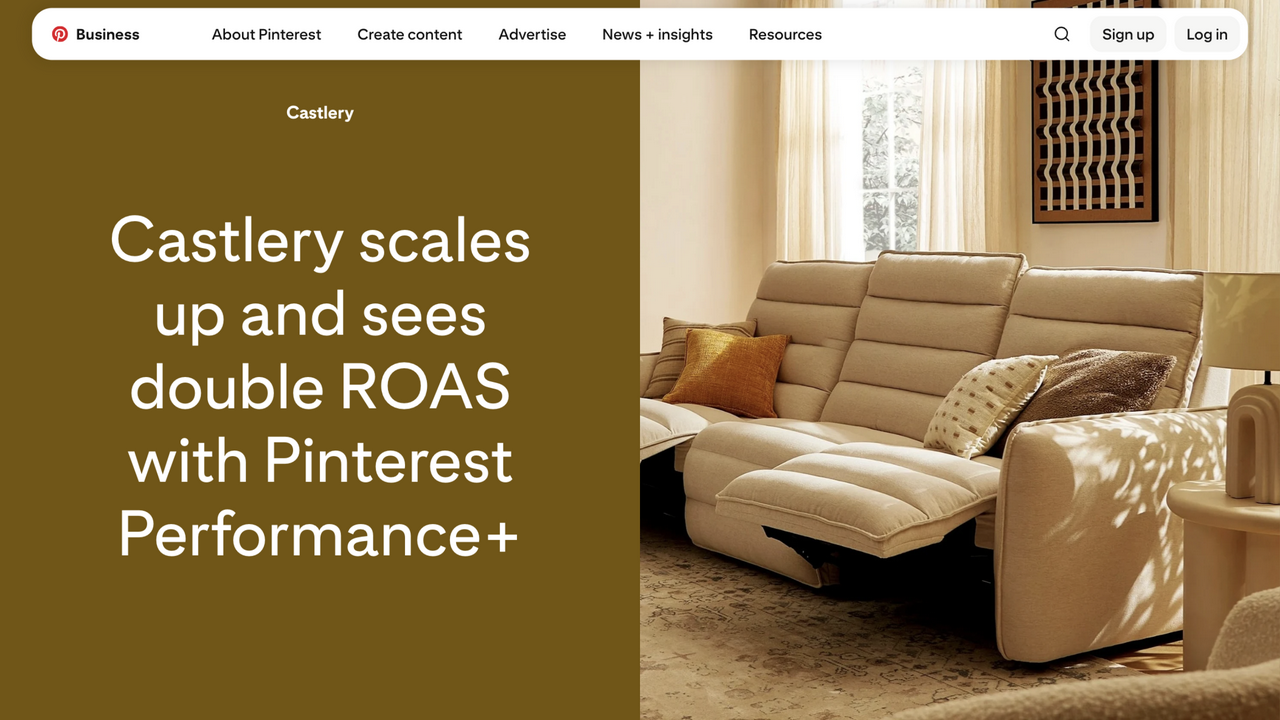
On Pinterest's business site, furniture DTC brand Castlery ran Performance+ with Shopping ads: ROAS doubled, AOV rose, and CPA fell 14%. Luxury peer TOD'S saw 197% ROAS with 28% lower CPC on Shopping ads, and Etsy reported a 12x increase in incremental ROAS.
Sources: business.pinterest.com — Castlery; TOD'S; Etsy.
Series: all ten emerging-media platforms compared on one page — Emerging Media Buying Guide 2026. 系列:十个平台一张对照表——《2026 新兴媒体投放总览》。
Want your Pinterest structure reviewed?
Want your Pinterest catalog, Shopping ads and Performance+ set up end to end? We open the account and run the first quarter with you. Leave your product category, price point and current channels — the account comes next.